Karin Shibata – Through the foooding glass

  • About
    • Who ?
  • Paris
    • Coffee Shops
    • Restaurants
  • Travel
    • Amsterdam
    • Barcelona
    • San Sebastián
    • Japan
  • Cook
    • Recipes
    • Chef’s Recipes
  • Product
    • Chocolate
    • Pâtisserie
    • Japanese
    • Limited / Seasonal
      • Christmas
    • In the Kitchen
  • Agenda
  • Blog
  • Contact

Category Archives: Foodipedia

Prosciutto di Parma, jambon de Parme | 10 facts

Posted on May 26, 2017 by Karin Shibata Posted in Foodipedia, Italian .
prosciutto-di-parma-jambon-de-parme

10 facts about Prosciutto di Parma, the delicious famous Italian dry-cured ham.

Prosciutto di Parma, le savoureux jambon italien, le saviez vous ?
 
有名なイタリアの パルマプロシュート 生ハム に関する10の事実。
 

Prosciutto di Parma


prosciutto di parma jambon de parme

 
1. Prosciutto from Latin pro (before) + exsuctus  “to suck out, dry out”

2. Parma ham has been crafted with the same care since Roman times, in Parma region.

3. Proscuitto di Parma ham became one of the first meat products to be awarded the Designation of PDO (Protected Origin status).

4. Prosciutto di Parma is 100 % natural, with no additives such as such nitrites which usually makes ham bad for health. 
Pure sea salt is the only added ingredient.

5. The italians pigs (born and raised in Italy) are fed with grains, cereals and whey of Parmesan Parmigiano-Reggiano cheese.

6. Proscuitto di Parma Ham with fat removed, contains 29% of protein and only 6% of fat (equivalent to white ham) for 176 Kcal/734Kj.

7. Ham and melon recipe is based upon ancient medical principles.
The coldness of the melon is balanced by the warm ham. The salt prevents melon putrafaction in the stomach. 

8. The fire branding “Parma” garanties the authenticity of the product. Watch out there are counterfeiting !!! 
Prosciutto di Parma is a leading brand of typical Italian wine and food products like Chianti or Parmigiano Reggiano cheese.

9. 100g of Proscuitto di Parma Ham helps cover 90% of  Vitamine B1(thiamine) and B6 (pyridoxine).

10. Since 20 years, less salt (- 15%) is used in the process  ! Good !!!


 prosciutto di parma ham logo brand


1. Prosciutto du latin pro (avant) + exsuctus “mettre à sec, desséché“

2. Le jambon de Parme a été conçu avec le même soin depuis l’époque romaine, dans la province de Parme.

3. Proscuitto di Parma est devenu l’un des premiers produits carné à recevoir l’AOP (statut d’origine protégée). 

4. Le jambon de Parme est 100% naturel, sans additifs tels que les nitrites qui rendent habituellement le jambon mauvais pour la santé.
Le sel marin pur est le seul ingrédient ajouté.

5. Les cochons italiens (nés et élevés en Italie) sont nourris avec des céréales et du lactosérum (petit lait) de Parmesan Parmigiano-Reggiano.

6. Le jambon hors gras extérieur, contient 29% de protéines et seulement 6% de lipides (équivalent au jambon blanc) pour 176 Kcal / 734Kj.

7. La recette associant le jambon de parme et le melon reposait sur des principes médicaux anciens.
La froideur du melon est équilibrée par la chaleur du jambon. Le sel empêche la putréfaction du melon dans l’estomac.

8. La marquage “Parma” garantit l’authenticité du produit. Faites attention aux contrefaçons !!! .
Il s’agit d’une marque leader du marché telle que Chianti ou le Parmesan Parmigiano-Reggiano

9. 100g de Proscuitto di Parma aide à couvrir 90% de Vitamine B1 (thiamine) et B6 (pyridoxine).

10. Depuis 20 ans, l’usage du sel a diminué (- 15%) lors de la fabrication ! Bien !!!
 

www.prosciuttodiparma.com

2 Comments .
Tags: Italian, Italian food .

La Pompia a rare citrus fruit | Salvatore Ticca – Ristorantino Shardana Cultural Festival | Paris 2017 | Part V

Posted on April 13, 2017 by Karin Shibata Posted in Foodipedia .
Salvatore Ticca - Ristorantino Shardana

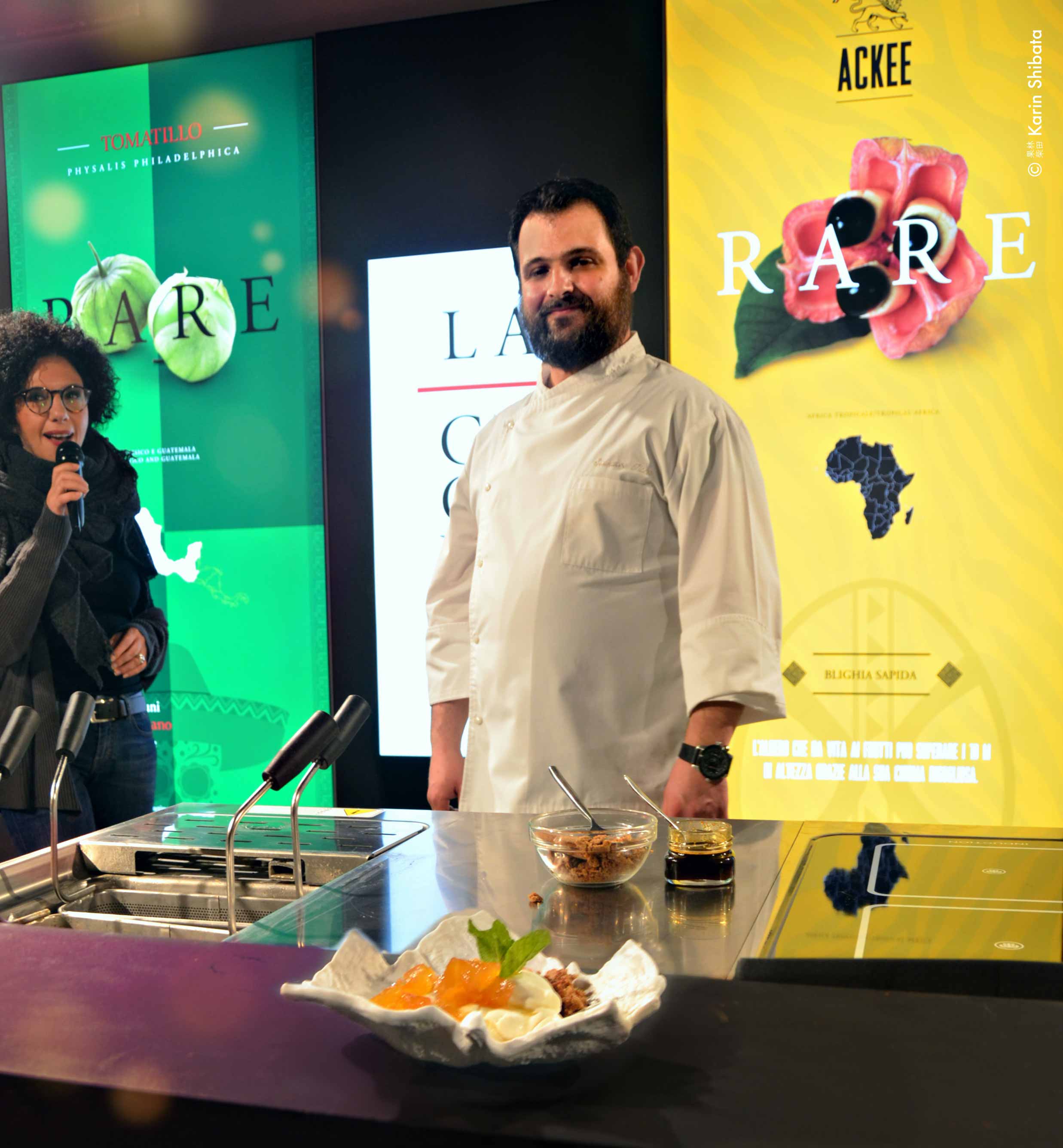
The pompia, a rare and delicious citrus ! Grazie Salvatore Ticca for the discovery ! 

La pompia, un agrume rare et délicieux que nous fait découvrir Salvatore Ticca ! Grazie ! 

「La Pompia」(ラ·ポンピア)は美味しくて、珍しい柑橘類です。グラツィエ、ルヴァトーレ・ティッカ氏より、ご紹介!


La pompia 


Salvatore Ticca - Ristorantino Shardana


Salvatore Ticca  – Ristorantino Shardana (Paris)


I love citrus fruit so when, Salvatore Ticca made us discover this rare citrus fruit, I felt so happy.

La pompia (Citrus × Mostruosa? Medica?)

This Sardinian citrus is used mainly in the manufacture of digestive liquor and in candied fruit.

 “La pompia intrea” (confit) is served on an orange leaf to guests at weddings,!


la pompia citrus agrume kodak bear

Salvatore Ticca nous fait découvrir cet agrume rare : La pompia (Citrus × Mostruosa ? Medica ?) 
L’agrume sarde est utilisé principalement pour  la fabrication de liqueur digestive et en fruit confit.
 “La pompia intrea”(confit) est servie sur une feuille d’orange aux invités lors des mariages, !


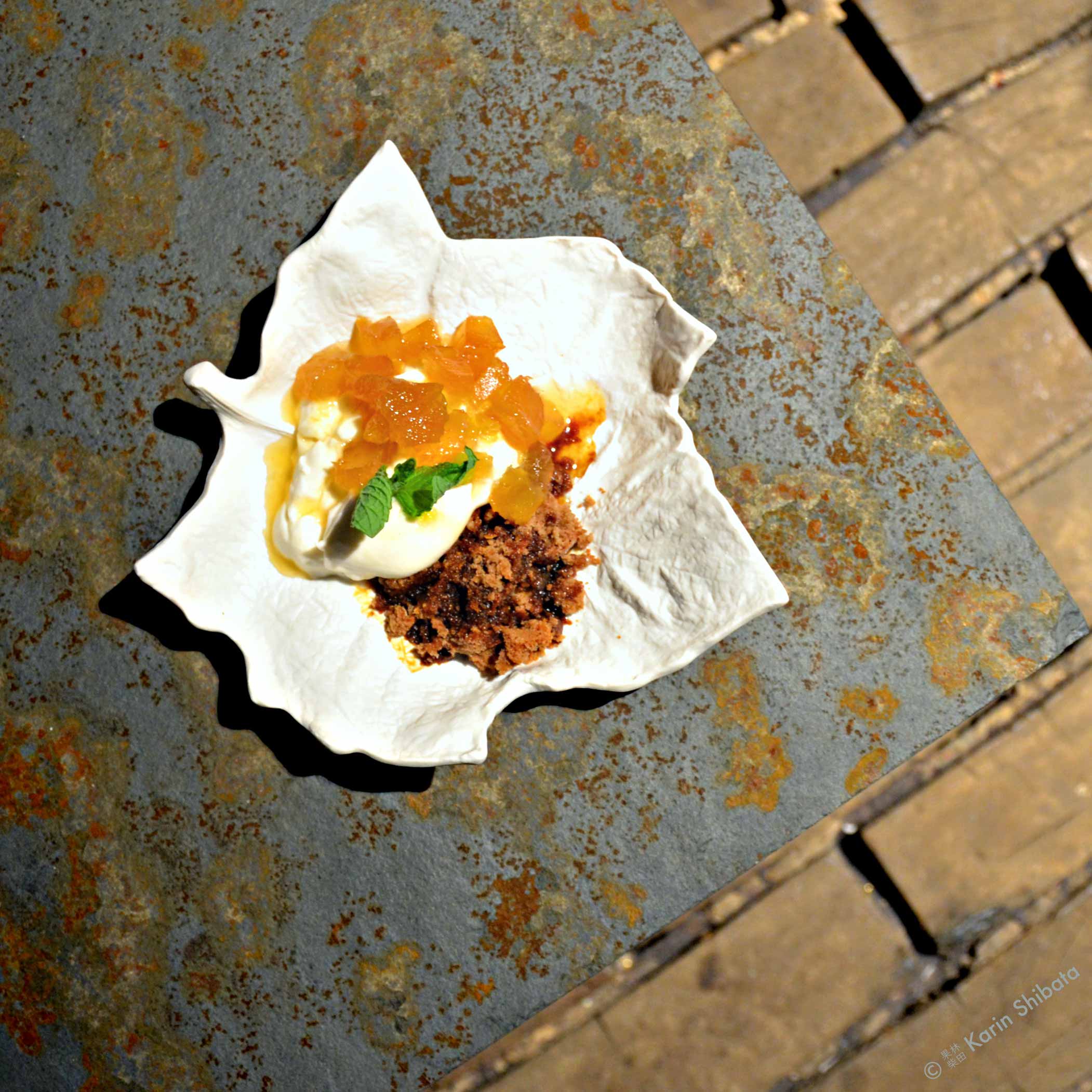
Recipe: A delicious fresh and fragrant dessert.

Italian cookie (Passino?), almond, grape must, blueberry jam, ginger infused cream with fructose and agar agar.

So impatient to discover his Sardinian cuisine restaurant, Ristorantino Shardana. 

So promising like this tasty, bright, inventive and delicious dessert. 


Salvatore Ticca Ristorantino Shardana

Recette: Un délicieux dessert frais et parfumé.
Biscuit italien (Passino?), amandes, moût de raisin, confiture de myrtilles, crème infusée au gingembre avec du fructose et pris à l’agar-agar.
Très impatiente de découvrir son restaurant de cuisine sarde Ristorantino Shardana.
Aussi prometteur, pétillant de saveurs, brillant et inventif que ce délicieux dessert.


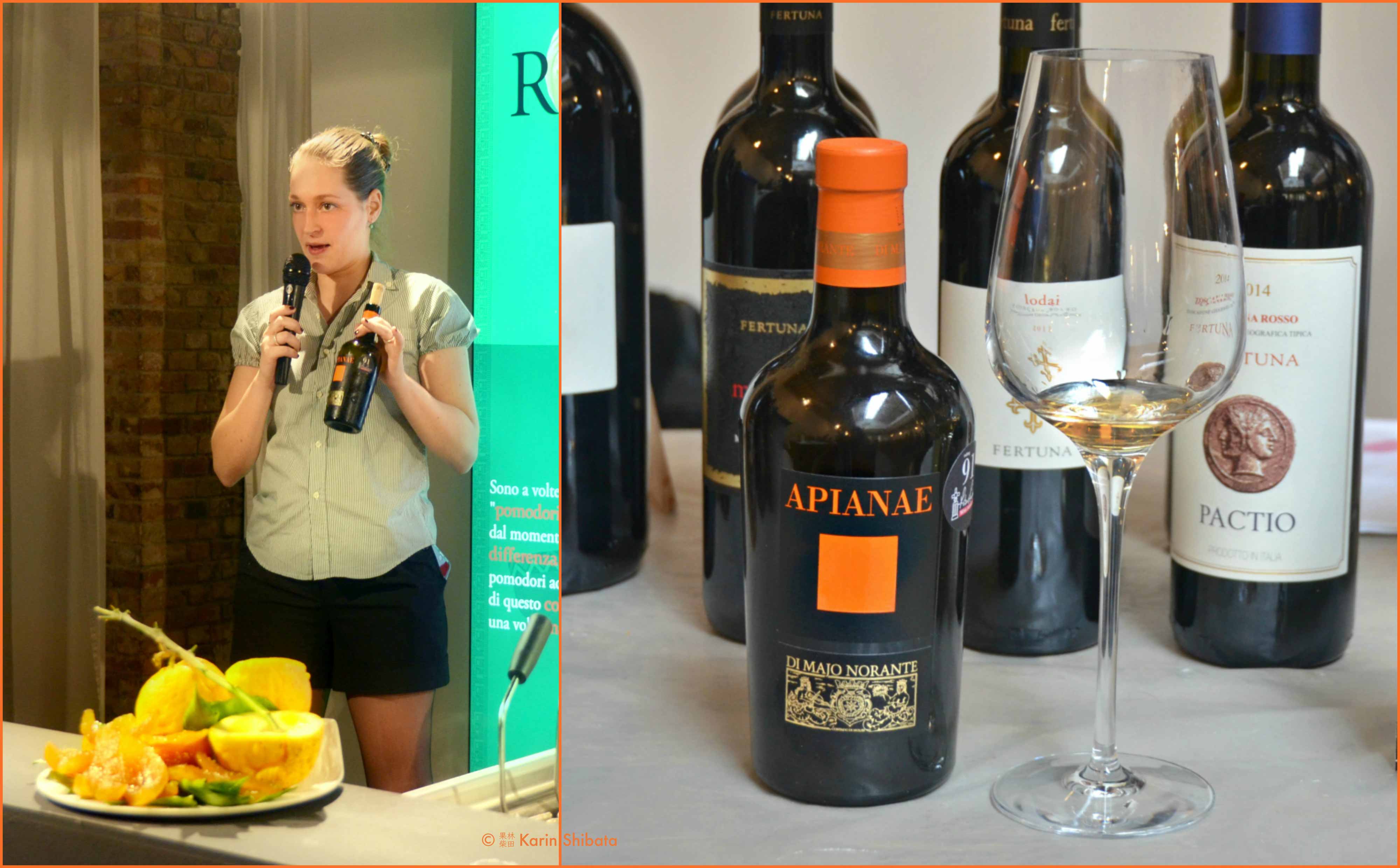
The dessert is paired with a delicious and rare (8000 bottles) Italian white Apiana – Moscato del Molise DOC

It is an ancient (200 B.C.), sweet, liquorous wine, loved by the Popes.


cultural-festival-paris-2017

Le dessert est associé à un vin italien blanc délicieux et rare (8000 bouteilles) : Apiana – Moscato del Molise DOC
Il s’agit d’un vin ancien (200 av. J.-C.), doux et liquoreux, apprécié par les Papes.


www.dimajonorante.com    

Viola Ferraris :  www.idea-vino.fr

 cultural-festival-paris-2017


This refined cuisine and wines can be tasted in Paris in Salvatore Ticca’s restaurant !

Cette cuisine raffinée et ses vins peuvent être dégustés à Paris au restaurant de Salvatore Ticca!


www.ristorantinoshardana.com


??????


Grazie Salvatore Ticca,Viola Ferraris, Cultural Festival et Mauro Bochicchio !

www.culturalfestival.eu

Leave a comment .
Tags: Cooking tips | Astuces culinaires, Cultural, Cultural 2017, Food festival, Italian chef, Italian food, Italian recipes, italian wine, Recipes | Recettes .

Rooibos | 10 facts about the South African Red Gold

Posted on September 1, 2016 by Karin Shibata Posted in Foodipedia .

Rooibos |10 facts about the South African Red Gold.

Rooïbos, informations insolites, ses bienfaits, ses origines.

ルイボスティー|南アフリカのレッドゴールド約10の事実。


What is Rooibos ? 

I) Rooibos is often refered as tea (Camellia sinensis) or herb… But, it is a legume (Fabaceae)… Yes, the pea family !  


1) Le Rooïbos est souvent désigné comme un thé (Camellia sinensis) ou une herbe ...Mais il s'agit d'une légumineuses (Fabacées)! Oui, la famille des pois!

1) Le Rooïbos est souvent désigné comme un thé (Camellia sinensis) ou une herbe… Mais, il s’agit d’une légumineuses (Fabacées)! Oui, la famille des pois! © Selena N. B. H.


2) Rooibos ?Aspalanthus linearis  “Roy-boss” /ˈrɔɪbɒs/, like “Red-bush” in Afrikaans. 
Often referred as Red Gold, Mountain Tea, Long Life Tea…


Aspalathus and Crotalaria illustrations from Flora of South Africa Marloth IMG 2181

2) Rooïbos?  “Le buisson rouge” en afrikaans. Souvent nommé comme l’or rouge, le thé des montagnes ou le thé de longue vie…


3) Red ? It looks more like a green bush with green needle shaped leaves and yellow flowers (making one pea ;-).
Rooibos leaves gets red during the fermentation process (oxidation). I would love to try green Rooibos.


Rooibos (Aspalathus linearis)PICT2813

3) Rouge? Il ressemble plus à un buisson vert avec aiguille en forme de feuilles vertes et de fleurs jaunes (faisant un pois ;-).
Rooïbos feuilles oxydent en rouge lors de la fermentation. (Je voudrais bien essayer le Rooïbos vert)


4) It can only grow in South Africa (Cederberg Mountains, 250km from Cape Town). 


Vineyards in the Cederberg - South Africa

4) Il ne peut vivre qu’en Afrique du Sud (Monts Cederberg, à 250km de Cape Town).


5) There are more than 200 species of Rooibos. 


Rooibos (Aspalathus linearis)

Il existe plus de 200 espèces de Rooïbos.


Healthy ? 

6) It is ancestrally used by the Khoisan tribe as an medicinal plant for skin care, digestion. 


Sameul Daniell - Khoisan besig om sprinkane te braai - 1804

 6) Il est utilisé, ancestralement par la tribu de Khoisan comme une plante médicinale pour les soins de la peau et la digestion.

7)  It is caffeine-free & light in tanin. Tannin contained in tea can reduce iron absorption.

Caffeine

7) Il est sans caféine et faible en tanin. Le tanin contenu dans le thé peut réduire l’absorption du fer. 


8) Rooibos contains less polyphenols quantity than tea but more varieties.
They are different from tea. It is the unique source of aspalathin.
Full of antioxidants and minerals  it is healthy (anti-aging, skin protection, heart, allergies, digestion…)


Rooibos tisane tea bag close up

8) Le Rooïbos contient moins de quantité de polyphénols que le thé, mais plus de variétés. Ils sont différents du thé. L’Aspalathine ne se trouve uniquement que dans le Rooïbos. Il contient aussi  des antioxydants et de minéraux, bons pour la santé.

9) It can be used infused in bath or directly on the skin for unbalanced skin.
Il peut être utilisé dans le bain infusé ou directement sur la peau pour la peau déséquilibrée.


How to enjoy Rooibos ?

10) It is traditionally served, hot with milk and honey. You can drink it hot or iced with lemon or infused with fruits. 
It is possible to make it hot (infusion from 1 min-15min according to taste) or cold brew (8-10 hours).


Il suffit de laisser infuser le thé parfumé de son choix, 3 min à 85-90 ° C et de le laisser refroidir. On peut y ajouter du citron, du sucre (miel, sirop...) et des fruits frais.Il suffit de laisser infuser le thé parfumé de son choix, 3 min à 85-90 ° C et de le laisser refroidir. On peut y ajouter du citron, du sucre (miel, sirop...) et des fruits frais.Il suffit de laisser infuser le thé parfumé de son choix, 3 min à 85-90 ° C et de le laisser refroidir. On peut y ajouter du citron, du sucre (miel, sirop...) et des fruits frais.

10) Il est traditionnellement servi chaud avec du lait et de miel. On peut le boire chaud ou glacé au citron ou infusé avec des fruits. Infusion à chaud (1 min-15min selon le goût) ou infusion à froid (8-10 heures).


My advice is to drink Rooibos for pleasure and wellness. For me, it is not a miracle superfood, as it can be read.
It is a precious healthy food given by nature.
Only be cautious if you have a hormone dependant disease (cancer, endometriosis) as rooibos contains phytoestrogen. 


Comment profiter de Rooibos? Mon conseil est de boire Rooibos pour le plaisir et le bien-être. Il n'est pas un remède miracle, ni un superaliment (j'essaie d'être prudent avec ceux ...). Seulement être prudent si vous avez une maladie dépendant d'une hormone (cancer, endométriose) comme rooibos contient des phytoestrogènes

Mon conseil est de boire le Rooibos pour le plaisir et le bien-être. Il ne s’agit pas d’un alicament miracle comme on peut vous le vendre. C’est un aliment précieux et sain que la nature nous offre. Il faut juste être prudent et ne pas en boire des litres si vous avez une maladie hormono-dépendante (cancer, endométriose…) car le rooïbos contient des phytoestrogènes.


And here is a very nice video about Rooibos tea made by Rooibos Ltd


☕☕☕

Leave a comment .
Tags: healthy, herbal tea, infusion, Rooibos, tea | thé .

Galette des rois – Kings Cake

Posted on January 6, 2016 by Karin Shibata Posted in Foodipedia .

So, what is this “la galette des rois” ?

Galette = A buckwheat pancake, crêpe or a puffed pastry

Rois = Kings

Literally translated King’s Cake, it is a seasonal and traditional pastry.

The puffed pastry is filled with frangipane. It is a sweet almond cream made with almond powder, sugar, butter, eggs and sometimes vanilla.

When ? 

After Christmas and New Year’s treats, do you really think french are stopping the feist? 

La galette des rois is popping in all French bakeries around the 2nd of january (I am lucky, it is my birthday)

pierre_herme_galettes_des_rois_kings_cakes_2014

Pierre Hermé’s galettes des rois


Some history or legends… 

To make it short:

The King’s Cake celebrates the Epiphany.
It is the revelation of God the Son as a human being in Jesus Christ.
It celebrates also the visit of the Magi to baby Jesus. 


Retable de Saluces – Les Rois Mages by Dohet Peeters


The 6th of January is also the end of the Christmas cycle. 12 days after the winter solstice (21th/22th december), let’s celebrate light ! 

Epiphany is on January 6th but I eat it as long as possible… 


Why is it so special ?

In each cake, there is a hidden… “fève” (bean)… Whaaaat ? All this for a bean ? 

Our industrialised mercantile world has replaced the original beans by porcelain figurines or a lucky charms which are often collectible items !!! 

pierre_herme_galette_des_rois_kings_cake_feve_2014

Pierre Hermé’s fève


“Tirer les rois” or “draw the kings”


The tasting becomes a game where the guests eat there pieces of pastry and look for the hidden bean. If you find it without loosing any teeth you have the honour to become the king or queen of the day. Of course you have to wear the paper crown matching the galette.


kayser_galette_des_rois_kings_cake_2014


Galette from the North or Brioche from the South

The traditional galette is pastry with frangipane, a delicious almond paste. 

In the South of France the cake is more often a brioche called « còca » in Occitan. 

eric_kayser_brioche_des_rois_du_sud

Eric Kayser – Brioche des rois du sud

The brioche is favoured with orange blossom aromas and covered with candied fruits and big pieces of sugar. 

3 Comments .
Tags: galette des rois, king cake .

Foam cakes differences – Angel, chiffon, sponge, génoise…

Posted on November 10, 2014 by Karin Shibata Posted in Foodipedia .

FOAM CAKES

Les différents types de gâteaux de type génoise ont une base commune. Les ingrédients principaux sont les œufs, le sucre, la farine et parfois de la matière grasse et de la levure. 

Foam cakes are fluffy airy cakes. They all have a common base. The main ingredients are eggs (batter method – whole egg beaten or foam method – white and told beaten separately), sugar, flour and sometimes butter or oil and leavening agents… 


Chiffon Cake 「シフォン・ケーキ」- United-States

The classical foam cake with eggs (usually foam method), vegetable oil, flour and baking powder. 

History: Invented in 1927 by a Los Angeles insurance agent and sold to Hollywood stars. The novelty was the use of vegetable oil instead of butter.

Result: Light, airy, tender, moist, rich


Sponge cake 「スポンジ・ケーキ」- England

A foam cake without vegetable oil or butter. 

History: The first recipe of the sponge cake is found in 1615, in Gervase Markham, an English poet book, The English Housewife. Or how to be a complete woman 😉 It is believed to be one of the first non-yeasted cakes.

Result: Light, airy


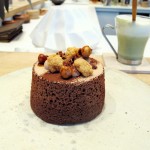
Chocolate and hazelnuts angel cake from Pâtisserie Ciel in Paris.

Chocolate and hazelnuts angel cake from Pâtisserie Ciel in Paris.


Angel Cake「エンジェル・ケーキ」- US

The “food of the angels”, the feather-light cake has no fat. No egg yolks, no fat and no leavened. Egg whites is the principal ingredient and it is baked in a ring-shaped tube pan and the heart of the cake garnished with fruit, cream…

History: Angel cakes became popular in US late 19th century and was a traditionally an African-American post-funeral meals.

Result: Light, very airy, fluffy. Served with fruits, jam, jelly or cream in its center.


Biscuit ou gâteau de Savoie  「ビスキュイ・ドゥ・サヴォア」- France

This French version of the sponge cake doesn’t contain fat and eggs are beaten separately. It often uses potato or corn starch.

result: Light, airy. Served warm of cold with French jam.

History: Probably one of the first French cakes. It was ordered in 1358 by the county Amédée VI of Savoy for the visit of the Emperor Charles IV of Luxembourg. To please the emperor a cake light as feather was asked to the cooking chef (maître queux) Pierre de Yenne.


Génoise 「ジェノワーズ」- Italy

The Italian foam cake contains butter and eggs are beaten whole.

Result: More consistent texture. Often used in composed or layered cakes.

History: From the city of Genoa, the capital of Liguria in northern Italy

1 Comment .

Instagram / Twitter

Instagram

CyberChimps WordPress Themes

CyberChimps ©2026